
You're in safe hands
Most banks only guarantee your savings up to £120,000. We’re the only provider that secures 100% of your savings above this amount.
Trusted by millions
We're backed by HM Treasury and we've been helping people save for over 160 years. Today, over 24 million customers save with us.
The home of Premium Bonds
We created Premium Bonds and you can only get them from us. Open an account and you could win big in our monthly prize draw.

Save or spend?
Got extra money for the first time? Before you spend it, take a moment to think about future you.
Saving. What’s the point?
A balanced diet, regular exercise, less doom-scrolling... saving fits into this list too.
Saving isn't just a money thing. It's a control thing. And it's a wellbeing thing. When you save money, you empower future you.
By saving what you can and adding to it when possible, you're giving your future self more options.
Building a saving habit
Use our calculator tool to see what regular saving could add up to over time.
Try different monthly amounts and see what works for your budget.
Could you save for your future self?
£0
Just your savings (not including interest earned)
5 useful money truths
Simple explanations to some common money terms.
Why do I need to save now?
There are no rules that say “you must save”. But, if you have come into some money, it can be tempting to let it sit in your bank account and just spend it. There’s nothing wrong with that.
However, if you moved some of that money into a savings account, you’d be less likely to spend it. You’re building a habit. You’re proving you’re in control and you’re thinking about the future.
 Now
Now
 Soon
Soon
 Later
Later
What’s an interest rate?
An interest rate is the amount of money your bank, building society or savings provider will pay you for saving with them. It is usually shown as an annual percentage. When interest is paid can vary for different accounts.
For example, if you have £100 saved and your interest rate is 3.5%, you will receive a total of £3.50 in interest over the course of a year.
Earning interest can help your savings grow over time. However, if inflation is higher than the interest rate you earn, the spending power of your savings may still decrease.
 Day 1
Day 1
 Day 365
What’s an emergency fund?
Imagine your laptop suddenly stops working just before a uni deadline or an important job application. Replacing or repairing it could be expensive.
If you've built up an emergency fund, you've got money set aside for situations like this, so you don't have to rely on a loan or credit card and end up paying more in the long run.
 Before
 After
After
What’s tax efficiency?
When a savings provider talks about "tax efficiency" it means minimising the amount of tax you pay.
Banks, building societies and savings providers commonly use this phrase when they talk about ISAs.
An ISA (Individual Savings Account) is a type of savings account where you don’t have to pay tax on the interest or returns your savings earn. For more information, check out our What is an ISA? guide.
 Taxed
Taxed
 Tax-free
What’s inflation?
Inflation is the rising of prices over time. It’s why parents might talk about things being cheaper when they were kids. There is no single reason for inflation because so many factors cause it.
Inflation means you get less for your money. For example, £4 today might buy you a coffee. But, inflation means the coffeeshop will increase their prices over time. So, in 10 years time, a coffee could cost £8.
This means any money you save today will probably be worth less in the future. Earning interest on your savings can help protect against this.
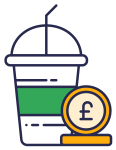 2006
2006
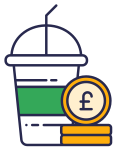 2016
2016
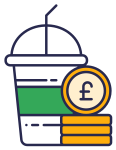 2026
2026